



Match vs. Lighter. My Candles Are Awaiting Your Reponse.
I know. You’re probably wondering why I would consider a plastic lighter instead of a match. I’m not! I’m not! Don’t worry. After seeing photos like these of baby albatross chicks who’ve ingested plastic lighters, I would never buy another one of those things.
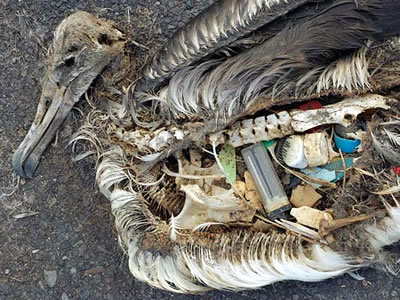
Detail of photo from the series Midway: Message from the Gyre by Chris Jordan
Albatross chicks on Midway Island, thousands of miles from civilization, swallow plastic bottle caps, plastic toys, and plastic lighters. And even if plastic lighers don’t end up inside an unsuspecting animal, they’ll still wind up lasting forever in a landfill.
So let me back up. After seeing photos like the one above of dead albatross chicks two and a half years ago, I made a commitment that after my plastic lighters ran out, I would switch to matches. So even though I still have these plastic lighters in my house, I started looking for plastic-free matches before I needed to.
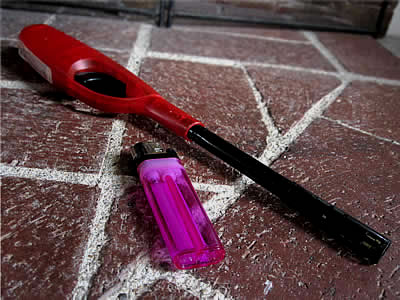
I wanted matches that were long enough to light a candle inside a deep candle holder or fireplace without burning myself. Unfortunately, all the long matches I found came in boxes wrapped in plastic. Finally, one day I found these somewhat long wooden matches packaged in a cardboard box without any plastic. The length is not perfect, but it’ll do.
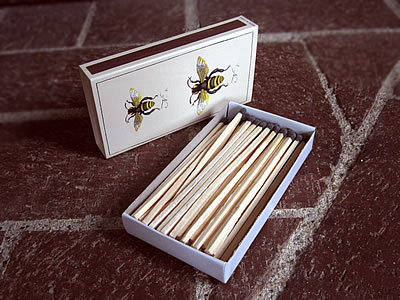
Then last month, I stumbled across the match vs. lighter question on the Re-nest web site and noticed that one commenter had written “Sounds like a question for Beth Terry of Fake Plastic Fish.” I was ready to respond when I remembered something I had read on the Tiny Choices web site and decided to do a little research.
In her post, “My New Flame: A Vintage Zippo Lighter” (unfortunately the post has been removed), Jenn extolled the virtues of the vintage refillable metal lighter she bought on eBay. Arguing that matches are disposable and perhaps come from virgin forests, Jenn felt that a reusable lighter was the way to go. But I wondered… is the butane in a lighter, a petroleum product, more eco-friendly than the wood used for matches, not to mention the chemicals used on the head and the strike strip on the box?
So first, I emailed the company that manufactures my new matches, HomArt, and received a reply from customer service rep Gary Crother who wrote,
The wood comes from Aspen or poplar and is impregnated with ammonium phosphate and paraffin wax…. The heads are a mixture of potassium chlorate with animal glue together with inert materials to moderate combustion and minor amounts of red amorphous phosphorus and colorants.
I also learned from Wikipedia that “The striking surface is composed of typically 25% powdered glass, 50% red phosphorus, 5% neutralizer, 4% carbon black and 16% binder….”
Sounds like an awful lot of chemicals compared to butane. So I decided to ask a few experts. First, I put the question to Umbra Fisk from Grist, the Dear Abby of eco questions. Her reply: Neither are perfect. Butane comes from petrochemicals and is usually stored in a container with at least a plastic cap. Matches are made from all the chemicals I listed above. She went on to say that the Diamond match company sources its wood from sustainable sources (although I could not find confirmation of that assertion on the Diamond web site) so they have that going for them. Unfortunately, all Diamond match boxes come packaged in plastic, so they are not the best choice for me.
With this non-committal reply from Umbra, I put the question to the smartest woman I know, Jennifer Taggart who blogs at The Smart Mama and whose book The Smart Mama’s Green Guide is a wealth of information about chemicals in the home and in the environment.
After weighing all the pros and cons, she leans towards the lighter as the lesser evil:
But here are my thoughts – the production of all the different ingredients for a match head probably exceeds the environmental cost of the production of butane for a reusable lighter. Also, most people don’t safely dispose of their matches – I’m sure you would, but many people just toss on the ground. So, I’m thinking that the combined effects of all those matches is probably worse than the reusable butane lighter.
So what do you think? Reusable lighter or wooden matches? Butane? Or ammonium phosphate, paraffin wax (which is also a petroleum product), potassium chlorate, animal glue and red phosphorus (which, incidentally, is used to make meth.), and wood.
Any chemists in the house?
P.S. The lighter is not going to prevent me from burning my fingers while lighting candles in deep candle holders.
P.P.S I also realize the question of matches vs. lighters doesn’t amount to a hill of beans in the greater environmental picture. But considered from a larger perspective, the production of all these chemicals for other uses like fertilizers and fireworks does.
What about electric lighters? Maybe they are the most sustainable option
So, then the question is what goes into producing lithium-ion rechargeable batteries (which fuel electric arc lighters)? Because, while you can replace them, they only last 2-3 years/500 charges.
I know I’m a few years late, but I really enjoyed this article while researching how my husband and I could ditch our Bics for lighting candles. My research led me to a product called Eco green charcoal lighter fluid. My next question would be, could I put something like ego green in a long neck Zippo lighter that usually takes butane? Here’s the site.
https://escogo.com/charcoal-lighter-fluid/ecogreen-charcoal-lighter/
Great article! Exactly what I was looking for. After rushing to light my candles with my matches so I wouldnt burn my fingers…then my bathroom filling up with that terrible match smell, it got me wondering so I had to search it! I thought immediately that i need a long candle to light initially so I could use it to light even my deep and narrow candle holders without burning myself. I thought you might appreciate that idea. By the way, I think I will store my matches for an emergency and invest in a refillable butane lighter. Thanks so much for the information!
The first problem is people, mostly smokers, tossing their lighters, butts, celophane wrap and packs into the environment. (Well, after the problem of being smokers.) Properly made landfills are contained, many cities burn trash, and the volume as a whole is quite compact.
The matches benefit from the wood all coming from tree farms–they don’t use virgin timber for much of anything these days. Even slab wood for exotic tables is from land clearance, not random cutting. Consumable products are made from trees grown specifically for the purpose, so that aspect is carbon neutral.
The chemicals are a toss up.
There are both liquid fuel and butane reusable lighters on the market.
I think the first problem is the bigger one. Smokers by and large don’t seem aware that everything involved with cigarettes (moreso than pipes or cigars) is trash, not just some residue.
I stuck with matches because I already had them.
What did you ultimately decide?
also consider that a refillable lighter will require additional packaging waste because you will need to buy cans of butane or lighter fluid in the future. those cans or bottles are typically made of metal that may not be considered recyclable due to its original contents, or it may be made of plastic, in either case there is likely a plastic cap or tip on that container, and possibly plastic wrap around it.
also consider that rechargeable electric doodads, including lighters, require rechargeable batteries, which utilize rare earth metals that require a great deal of pollution and damage to the earth to mine and once they have spent their ability to be recharged (we all know that moment when your phone or laptop HAS to be plugged in or it won’t work) they are essentially no longer useful materials (they cannot be taken back to the factory to be “re-recharged”.
also all of these options require buying something either at a store or online, which means that probably all of these options were made in a factory and shipped to somewhere be it the store or your address. the factory and the shipping create massive negative environmental footprints.
sadly it is extremely difficult to do a great many things these days without creating some kind of negative environmental footprint or at least fingerprint. living in the post-industrial age is really not the greatest if you care about the environment.
if you do find a solution, be sure to let us know.
My solution for deep candles is to light a taper candle, then light all of my other candles from that one flame!
I recently purchased Diamond greenlight Strike on Box matches because on the box it says that the wood comes from responsibly managed forests; only to find out that the match tips contain perchlorate materials.
“Perchlorate is a naturally occurring and manmade chemical that can affect the functioning of the thyroid gland at sufficiently high doses. Perchlorate is present in some public drinking water systems and in some foods. FDA has monitored perchlorate levels in a variety of foods and conducted an exposure assessment to determine the exposure of U.S. consumers to perchlorate from the diet.”
“What is Perchlorate?
Perchlorate is both a naturally occurring and manmade contaminant increasingly found in groundwater, surface water and soil. Most perchlorate manufactured in the U.S. is used as an ingredient in solid fuel for rockets and missiles. In addition, perchlorate-based chemicals are also used in the construction of highway safety flares, fireworks, pyrotechnics, explosives, common batteries, and automobile restraint systems. Perchlorate contamination has been reported in at least 20 states. Perchlorate greatly impacts human health by interfering with iodide uptake into the thyroid gland. In adults, the thyroid gland helps regulate the metabolism by releasing hormones, while in children, the thyroid helps in proper development. Perchlorate is becoming a serious threat to human health and water resources.”
I was so upset I refused to use any more. I will definitely not be buying this product again and wrote an email to Diamond about it. Still waiting on a response.
There has to be a more natural or eco-friendly way of getting accessible fire.
Sorry for the long rant. Hope this helps or maybe even raises some kind of awareness to this issue.
They now make rechargable electric lighters using tesla coils!
I’m not sure if I will be able to post, But to me it seems that going to such an extent of not using a lighter would infact work in the opposing direction you are hoping for however little impact it does have. (I assume that is the point of MPFL) Plus you already own the lighter, What would your plan for disposal be? Take the lighter apart and find that 90% of it isn’t recyclable, Then instead of it finding its way to landfill it ultimately could end up in the soil of where your house once stood. Which is the entire point you are fighting.
My summary – Alot of what we do is the wrong way, The only thing I can see you doing with that lighter, and making it worthwhile to whatever damage it had during production is to use it and look after it. This site seems very odd to myself, But I can see why someone may choose to live the style. I say look after the lighter, It’s a treat for yourself and you can stay humble in the knowledge it is not the worst.
Now for something that could help you, If you’re willing to do the work, but your matches could have multiple uses.
You will need a bit of steel, It doesn’t have to be shaped but for ergonomics it can help (http://sharkdesigns.co.uk/home_pages/1_fire_online_store.html) , A flint or even better a bit of quartz and a knife, having some oil or paraffin could also help, You want to find a nice dry bit of tinder and feather the end of it (https://upload.wikimedia.org/wikipedia/commons/1/11/Feather_stick.jpg) Drop your stick into your oil and then remove it and let it dry (You can store these in a breathable dry place, This should now light from a spark produced by your flint/quartz and steel. (You may hurt your fingers at first, Over time you will get better.) If you can’t light the match with a spark, Try making some char cloth which will light very well and then can be used to light your matches..
Cheers.
I too have been trying to get plastic fripperies out of my life and was debating the same things as yourself. It seems we have no clear answer…?
Thanks for the interesting article. I have never even considered these two options. I usually just buy a lighter at the store and never think twice about what it is doing to the environment. Now that I’m a little more educated I’ll think about it more when I’m buying this stuff.
Other people have mentioned both skewers and spaghetti as spills already, my first two ideas.
Third method: get a broom, like a handmade one, (think craft show or farmer’s market) and pull off a bristle when you want to light your candle. They are also good for checking to see if your cake is done.
Also, when the gas guy came to turn on our gas he had a device made from an alligator clip on the end of a metal stick so he could reach the pilots with his match.
yeah great question as I am a smoker and I also have a gas stove that I light regularly. I use long matches for the oven. I am interested in reducing my carbon footprint and was about to switch to matches for smoking. Now I’m thinking of using Dad’s old zippo instead. I get it refelled at the tobacconist as I just don’t like dealing with that personally. But of course eventually he is going to throw away the bottle, can or whatveer it comes in. I am guilty of throwing a few of those plastic lighters away. The poor albatross though. I didn’t know candles had any emissions, a couple of people mentioned it. Yes I light candles to save on lighting, but I am also buying some sun jars which last for years and have the same ambience as a candle. You would still need candles on rainy days though. I guess there is probably some plastic in the solar panels in the sun jars or whatever, but perhaps you want to look them up and consider those. I have sunny window sills so I”m really keen on the sunjars. Sorry about my smoking, but yes I am trying to do a little bit like make my own household products and grow my own veges so hopefully even a little bit counts.
Never apologize for being yourself. So you smoke it’s not the end of the world. Seems like you are doing your part to help earth. Be proud of who you are. Blessed Be.
Aspen was the first to note that Zippos do not use butane, they use lighter fuel with naphtha. I need to research this, but none of the options are perfect, certainly. Though a large bottle of Ronsonol will last even a serious smoker a pretty long time, it’s still a plastic bottle. I think Zippo brand lighter fluid still comes in a steel can with a plastic top, but I only ever see very small ones.
As far as a reliable lighting instrument, you can’t beat the durability of a Zippo. As long as you don’t lose it or have it stolen, there is no reason not to have it for life. They are guaranteed by Zippo, no matter where you got it, forever (the inside part). My husband has never been a fan of butane lighters, which he reports are unreliable.
Love the spaghetti idea for lighting candles. Smart, smart, SMART people! : )
Thanks so much for doing all this research! I used to buy plastic lighters, but I discovered recently that the matchbooks that I find on the ground are usually enough to light all the incense I want. I’ve often wondered, though, about those chemicals on the tip, and whether or not they prevent used matchsticks from being compostable.
I’ve been wondering about this for a while. I was aware of red phosphorous amongst other chemicals used in the production of matches, as well as the impact of using wood, etc. My house is actually heated in part by a wood stove (in the winter we have a lot of power outages and the cost of heating is quite expensive as well), so one of the two things is sort of necessary for me. I also smoke a pipe sometimes.
I actually have a zippo, but the problem I have with that is the fact that in order to refill it, I need a bottle of lighter fluid (which is either completely plastic or contains plastic components). Zippo fluid (and other lighter fluid) also doesn’t seem to burn in a very clean manner. I honestly don’t know. It’s a bit of a conundrum for me as well. Obviously disposable lighters are a waste, but I’m wondering about refillable butane lighters over Zippos perhaps.
Reading the comment above, a good, reliable fire starter would also work for me.
I use kitchen matches for all my lighting needs. The reason being that when done the match remnants will decompose while the plastic from the lighters will not. To me that makes the difference. Considering that there are chemicals in both types, at least the match will turn into compost!
Spaghetti or — since the narrowest pasta I usually have on hand is fettuccine — I often use one of those little bamboo skewers you use to make satay (am I spelling that right?). As with the spaghetti, just keep relighting it to light the candles. One skewer lasts forever.
@Randy Outlaw Yes. All of Chris Jordan’s photos from Midway are unaltered. If you click the link under the photo, you will see a whole lot more where that came from. Midway Island is a plastic disaster.
@Darryl Can you use the lit spaghetti idea? No idea since I am clean and sober these days.
@Sakeenah I only buy/burn unscented local beeswax candles and since no one has asthma in our home, I think it’s okay. I have actually gotten rid of all the scented candles that were given to me over the years because they make me cough and give me a headache, so I hear you.
Everyone — I love the idea of lighting a piece of spaghetti! Maybe I’ll keep a container of them near the fireplace. However, I actually light candles or fires so rarely that my lighters and my new matches will probably last a very, very, very long time.
have you addressed the issue of the chemicals that are in your candle?
I love candles but have stopped buying them b/c my son has asthma and I dont want to contribute to bad indoor air
I take option C: Flint, steel, and a wooden spill if longer burn time (like lighting multiple candles) is needed.
A spill a long, tightly curled wood shaving, by the by… there’s a page on the planes used to make them, with a picture of a spill, here:
My husband bought a flint and metal striker set at Colonel Willamsburg how well it works depends upon the style of candle. Tapers are easier to light with it than pillar candles.
Beth – check the bottom of your red plastic lighter. They don’t advertise it but most of those lighters are just as refillable as a zippo. If there’s a little metal tube sticking out of the bottom anywhere, your lighter may never need to go into a landfill. Most people chuck them after they’re empty, but they could last in use forever, instead of in the ocean forever.
What about us poor weed smokers? We can’t light our bowls/bongs w. matches and the chemicals in Zippos are terrible for our lungs and make our yummy weed taste terrible.
I’m always amazed at the things you come up with that hadn’t crossed my mind (yet). We aren’t smokers so mostly it’s a matter of lighting fires in the fireplace and the occasional candle. However, my husband does like to carry a lighter when we go see our friends in New Orleans who sing in a rock band on Bourbon Street. For some reason he likes to be able to offer people a light when they can’t find their lighter or in case a power ballad breaks out. 😉 Last year he bought a beautiful Zippo lighter with the firefighter emblem on it (he’s a volunteer firefighter). Before that he would buy a cheap plastic lighter as soon as we got to New Orleans and usually throw it away before we left. In that case, it seems the Zippo is the better choice.
I use paper matches held in a pair of spring loaded kitchen tongs for candles and fires.
For the furnace and water heater pilot lights a friend made a ” double loop on a stick” for want of a better term , out of a metal cloths hanger, that I slide a paper match into in order to reach the long distance back towadrs the pilot. The latter is an old tenement trick. Matches were expensive in the tenements. Women used wooden matches to light one gas jet on the stove and then quickly lit the second jet and blew out the match. They reused the nubs of the match in the loop gadget to light other needed jets/candles etc until there was no more match left.
Great question and comments. I wonder, is that an unaltered authentic photo of the baby albatross? People of the world use so much fossil fuel for so many purposes. It’s discouraging. The beeswax candle lit by a spaghetti noodle is a winner, that’s for sure.
here is the ronson reillable butane bbq lighter I got
How about a refillable Butane Lighter? My boss just got me one at work to light oilot lights and it is great! Sure made out of plastic… but refillable means it should last until I retire in 5 yearsl
Phew, a reminder at how very complicated living with as little impact as possible can really be. I so appreciate your thoughtfulness about this question, but it seems like a bit of a draw…both are better if they help us to light our beeswax candles and turn off our lights a bit more often, or to turn away from other far more significant lifestyle choices with environmental impact.
In case you get inspired to do more research, why not compare kerosene lamps and beeswax candles to electric lights?
I like the flint solution (better yet, I’ve got a used one my father gave me). But I’m masochistic like that, I like cantankerous solutions that fit my ethics.
I bought my boyfriend a zippo for christmas (yes it was new, mea culpa!) because I broke one of his plastic disposable lighters, felt bad, and couldn’t bring myself to replace it with another disposable. (I broke it during what is now furtively referred to as The Kosher Chicken Incident, a very dark time indeed)
As usual, your thorough research is comforting – there’s just something about knowing where information probing the depths of questions I never thought to answer is centrally located that my “inner librarian” rejoices over.
Have you checked out the IMCO lighters? They are a vintage design from the WWI or WWII trenches. They have an integrated “Candle” that could be used to light deep candles. Check them out, just do a search for “IMCO Lighter” on Google. They are truly an example of usage based design, they work great and they look cool.
Andrew Rodgers
really, its better to not burn candles at all. they have health implications and burning anything is likely to cause respiratory ailments.
Hi Carol. What about local, unscented beeswax candles, which are the only kind I ever burn.
Here’s a flint and steel kit that looks plastic-free http://www.grannysstore.com/Wilderness_Survival/flintandsteel.htm (and costs a heckuva lot more than a bic)
How about flint and steel: http://www.northwestjournal.ca/I1.htm or a magnifying glass? (Personally, I hate the smell of sulfur from a lit match so I always use a lighter…but if it ever runs out of fuel, I’ll have to come back and see what you come up with).
What about paper matches? I have a gadget that was a gift many years ago…it holds the match like a big pair of tweezers and you can reach any deep wick with it. I guess the match head might still be a problem but the paper would decompose right?
Wow, as the commenter you mentioned in your article, it’s great to see that you actually posed this question to yourself and did the research to back it up. There’s a lot more grey area to this question than I certainly would have imagined.
While it may not amount to a “hill of beans,” your research did a great job of shedding the light (ha, sorry) on the complexity of a seemingly simple product. As a vegetarian who now avoids leather, I guess the animal glue now makes matches less than vegetarian/vegan. Who knew?
Thanks for the research and all you do to keep us aware of our impact, however minute the detail.
I don’t know how good this is but sometimes when I need to light a candle I use the fire from the stove (most of the time is while cooking) and stick a spaghetti or a piece of paper that we can’t recycle…
Of course not useful if there’s a blackout…
This is nothing about which to choose (though I personally prefer wooden matches because I’m scared of lighting small lighters), but rather lighting candles in deep holders/wood fires.
Light the end of a piece of spaghetti. It burns very slowly and will let you light several candles. Then you can blow it out and keep using it until it’s too short.
I’ve always used a piece of uncooked spaghetti to light any wicks I can’t reach – light the end and then light the candle, and one piece of spaghetti lasts forever.
Hi E.D. Unfortunately, I wasn’t clear enough in my post that I was referring to a vintage (meaning second hand) lighter like Jenn’s. In that case, the energy and mining to create the metal lighter can be removed from the equation and we are left with extraction, refining, and shipping of the butane.
But I’m really not sweating it. Like Amber said, the plastic lighters I already have will probably last a very long time. But I like to consider these things.
You can light a piece of spaghetti to reach into deep candleholders. This doesn’t solve your how-to-start-a-fire problem, but it does solve your matches-are-too-short problem.
Considered using a bowdrill? 🙂
I say get a used refillable lighter.
I get by on discarded lighters.
We have been lighting my son’s lantern he made at Christmas for his lantern walk each evening for dinner. I also want to teach my son (when he’s older) to respect fire and learn how to handle a lighter/matches so he doesn’t accidentally hurt himself. This is a good question, Beth. I buy the long plastic torches but I’ve noticed they run out very fast. (At least the ones here in England do compared to the US previously purchased ones). But I don’t like buying disposable plastic. I had no idea about all the chemicals on a wooden match – and for vegetarians/vegans out there concerned with the animal glue, they may want to consider other alternatives also. Hmm…. do they make refillable long torches vs. lighters?? There’s a new business for someone! I’d buy that.
Here is one at REI, although it likely comes in some plastic.
https://www.rei.com/product/762947/light-my-fire-swedish-firesteel-bbq
Why not some flint and metal. They sell the little camping tools. You would then need a little plate to have a mini burn pile. Then you could have a genuine stick to go light things.
Then theres no need for plastic. Although it is time consuming.
Matches
-the wood has been logged and cut into strips using power derived from fossil fuel
-chemicals as you have listed
-power and raw materials you need to make and ship those chemicals
-paper to contain the matches (paper production is water- and power-intensive)
-power used to ship the paper containers to the match factory
-shipment of the finished matches using power derived from fossil fuel
-possible improper disposal of strike strip or unused matches
Reusable lighter
-power used to mine the ore and produce the lighter (very energy intensive even if it is recycled aluminum)
-power to ship the finished lighter
-power used to drill, refine, and ship a petroleum product
-power to produce the large butane container
I would probably stick with the matches on the basis of total carbon footprint because of all the power needed to drill, refine, and ship petroleum products.
We got a bunch of those long plastic lighters years ago, when we were married. So far, they’re still going strong.
Honestly, though, we rarely light anything. It’s my daughter’s birthday this weekend and so we’ll be doing candle for her cake, but outside of birthdays we burn candles no more than a few times a year. And since we don’t smoke or camp, it means that it’s pretty rare for us to actually light something in any case. Given that, I think I would probably look into plastic-free matches, since refilling a lighter sounds like a lot of work for 6 uses a year.