



Antimony – Another reason to avoid bottled water… and polar fleece?
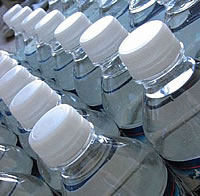 Bottled water sucks. Aside from the moral issue of privatizing what should be a public trust, the plastic containers are made from oil, a non-renewable resource, and last virtually forever in the environment. We know this. We know about the waste from plastic water bottles and the fuel that it takes to ship them. We know we should be drinking tap water and filling up our reusable bottles if we want it to go.
But some of us, taking the REDUCE, REUSE mantra to heart, refill those disposable plastic water or soda bottles instead of using a non-plastic container. It’s one way to keep plastic out of the landfill, right? True, but it might not be the healthiest idea.
 Last night, Martin from the Plasticless blog posted a video demonstrating how to boil water in a plastic bottle (the typical #1 PET disposable bottle) and wondered if this practice was safe. He, like most of us, had heard that heating food in plastic is a no-no, yet he had stumbled upon instructions for doing just that.
At some point in my plastic travels, I learned that antimony, the catalyst for PET (polyethylene terephthalate), had been found to leach in very small amounts from disposable water bottles. But I didn’t really worry about whether or not this leaching was harmful because to me, there were already so many other reasons to avoid bottled water, I simply didn’t need another one. Martin’s post started me wondering again, especially considering how many people have told me that they reuse disposable PET bottles.
A Google search turned up two relevant studies. A 2006 University of Heidelberg study found that antimony leaches in greater amounts from PET bottles the longer they are stored. And a 2007 Arizona State University study showed clearly that antimony leaching increases significantly as the temperature increases and that bottles stored in hot cars and garages during the summertime can leach more antimony than the 6ppb allowed by the EPA.
I haven’t found a study of PET bottles refilled and reused. I don’t know if reuse of bottles would cause more or less leaching than storing water in them for long periods of time or, um… boiling water in them! But it does make you wonder, doesn’t it?
In fact, I wondered aloud about this very topic last night on Twitter (well, aloud in my own head as I typed) and Jennifer Taggart, aka thesmartmama, responded: @fakeplasticfish Antimony shows up when I test fabrics such as the fleeces made from recycled PET.
Jennifer is indeed smart. In fact, she’s one of the smartest women I know. In addition to working as an attorney, she also blogs, has written a soon-to-be-released book, and tests homes and the objects in them for toxic metals like lead with her Niton XRF analyzer. And now she tells me that she’s tested clothing made from recycled PET bottles and found antimony in them.
For many years, Patagonia has manufactured polyester fleece jackets from recycled soda bottles, as well as recycled Patagonia clothing. The company has led the way in product stewardship and environmental responsibility. Other companies followed. And now, even Sears has begun selling the world’s first suit made of recycled PET bottles.
But you know, as good as it sounds, I’ve never been thrilled about the idea of clothing made from recycled bottles. Yes, something needs to be done with them. But doesn’t creating another use just encourage production of more disposable bottles in the first place? And if chemicals from the plastic can leach from the fabric onto us, is this such a great alternative?
I don’t have the answers. I’m just asking the questions. Maybe the amount of antimony leaching from recycled PET clothing is negligible compared to pesticides and flame retardants that can leach from even traditional fabrics. I’ve been writing this blog for well over a year and a half, and the more I learn, the less I know for sure! But it does make you wonder, doesn’t it?
Anyway, back to Martin’s original question: if you want to do a cool experiment to see if you can boil water in a plastic bottle without melting the bottle, watch the video and try it (carefully!) Just don’t drink the water afterwards!